
Quick Answer
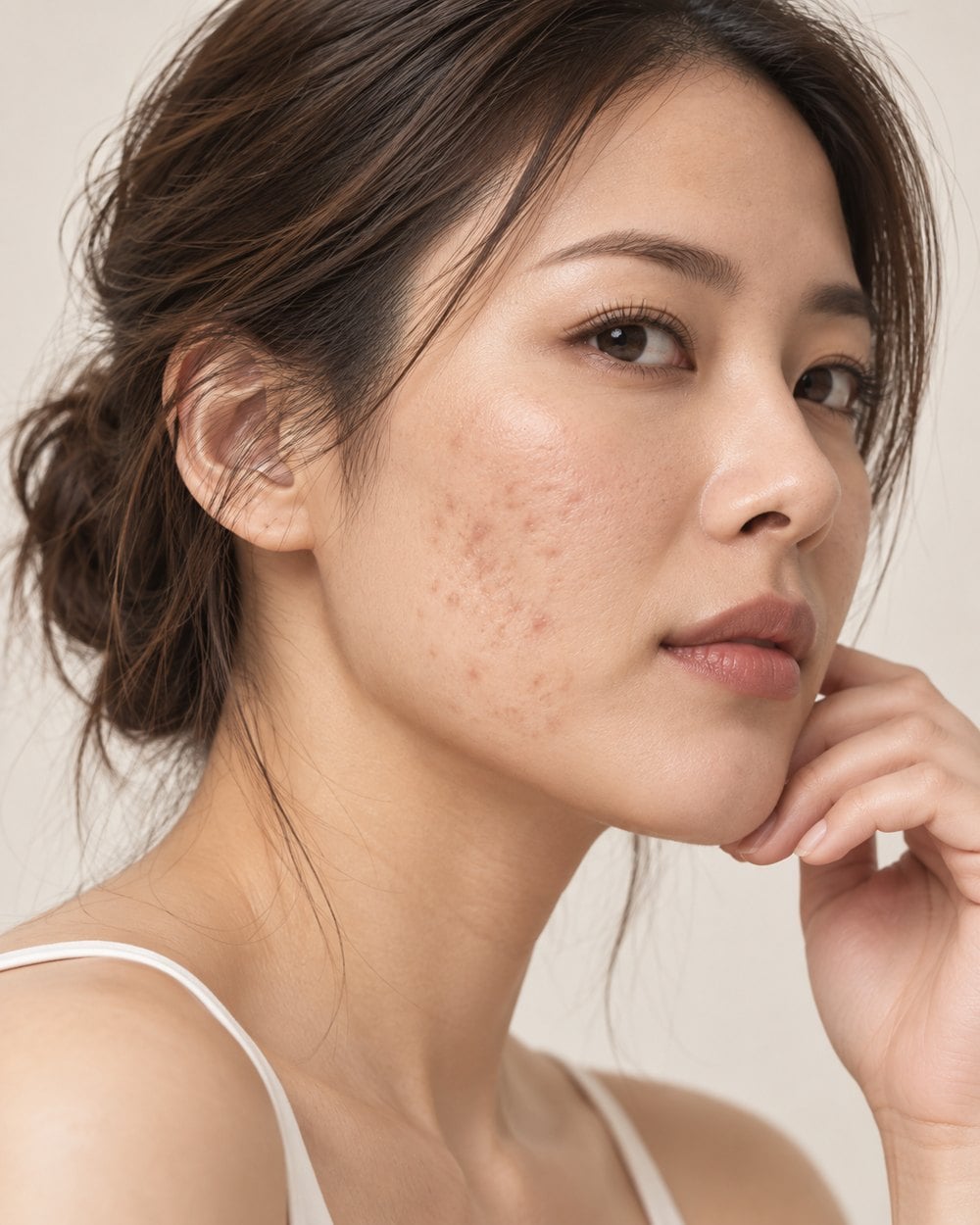
Acne scarring happens when the skin's repair process makes too little or too much collagen while healing an inflamed breakout. Scars can be meaningfully improved with the right approach, but they're usually permanent, so treating active acne earlier matters as much as the scar treatment itself.
What's actually happening
When an inflamed acne lesion damages the skin, the body repairs it by producing new collagen. Too little collagen leaves a pitted, depressed (atrophic) scar; too much produces a raised (hypertrophic or keloid) scar. Early scar tissue is dominated by a different collagen type than mature skin, which is part of why scarred skin looks and feels different even after it has fully healed.
Roughly 80 to 90% of acne scars are the atrophic, depressed type, about three times more common than raised scarring. Most people who scar actually have more than one scar type at once, a mixed presentation, which is a big part of why a single technique rarely addresses everything and combination treatment plans are the norm rather than the exception.
Explore the different scar types
Tap a type to see how common it is and how it's typically approached.
60–70% of atrophic scars
Narrow (under 2mm), deep, V-shaped scars extending into the deeper skin layers. The single most common atrophic subtype, and among the hardest to treat with resurfacing alone. Targeted techniques like TCA CROSS, a high-concentration acid applied to individual scars, are often used instead.
What we know, and what's still debated
Scarring risk is partly predictable, and partly genuinely not — here's the honest picture.
Scar depth & severity of the original lesion
Deeper, more inflamed acne, cysts, nodules, nodulocystic acne, carries a meaningfully higher scarring risk than superficial breakouts.
Delayed treatment
Waiting longer to treat active acne is itself a risk factor; studies linking stronger, longer inflammation to scarring support treating acne earlier specifically to reduce scarring risk.
Picking or squeezing
Directly increases inflammation and scar risk; applying treatment instead of manipulating a lesion measurably lowers that risk.
Genetics
Inherited differences in collagen production and wound healing respond genuinely affect who scars and how severely, independent of how the acne itself was treated.
Smoking
Associated with more severe acne scarring in the available evidence, on top of its other effects on skin healing.
Who's commonly affected
80–90%
of acne scars
are atrophic (depressed) rather than raised
60–70%
of atrophic scars
are the icepick subtype, the hardest to treat
31–62%
improvement range
reported with microneedling across available studies
Up to 12 months
for full results
visible improvement starts around 6 weeks, continuing to build
Most patients have more than one scar type at once, which is why combination treatment, addressing colour, texture and volume separately, is generally the more realistic approach than expecting one technique to fix everything.
What to expect at your consultation
Scar type mapping
Your doctor identifies which scar types are present, icepick, boxcar, rolling or hypertrophic/keloid, often using a simple stretch test to distinguish rolling from boxcar scarring.
Severity grading
Scars are graded on a scale from macular (colour change only) to severe (can't be flattened by stretching), following clinical frameworks dermatologists use to track change over time.
Active acne check
Active breakouts are treated first, since your skin needs to be clear before scar treatment, as active inflammation and scar treatment can interfere with each other.
Skin type & risk review
Darker skin tones and any history of keloid scarring are specifically flagged before choosing resurfacing, peeling or laser settings, given the real elevated risk involved.
Combination plan
Most plans combine two or more modalities, since treating colour, texture and volume usually takes different techniques addressing each separately.
Important Cautions
- • Scars are usually permanent; treatment can meaningfully improve their appearance but complete erasure isn't a realistic expectation to set.
- • Resurfacing and peel treatments carry a genuinely elevated hyperpigmentation and scarring risk in darker skin tones; deep peels and aggressive laser settings are generally avoided for this reason.
- • Treating active acne comes first, since scar treatment started while acne is still active is both less effective and can create new marks.
- • Hypertrophic and keloid scars can recur even after apparently successful treatment, and need a different approach, usually steroid injections, to depressed scars.
- • Seek medical review for a scar that keeps growing beyond its original border, becomes painful, or changes texture rapidly — these need proper evaluation, not cosmetic treatment.
Treatment categories, by evidence strength
Matched to scar type, since the same technique that helps one scar can underperform, or worsen, another.
Moderate–strong evidence
Fractional / CO2 laser
Studies report 50–80% improvement in atrophic scars, but with more downtime and a real hyperpigmentation risk, especially in darker skin.
Chemical peels
Best suited to flat, pigment-only (macular) scars; icepick and rolling scars usually need other techniques alongside peeling.
Microneedling
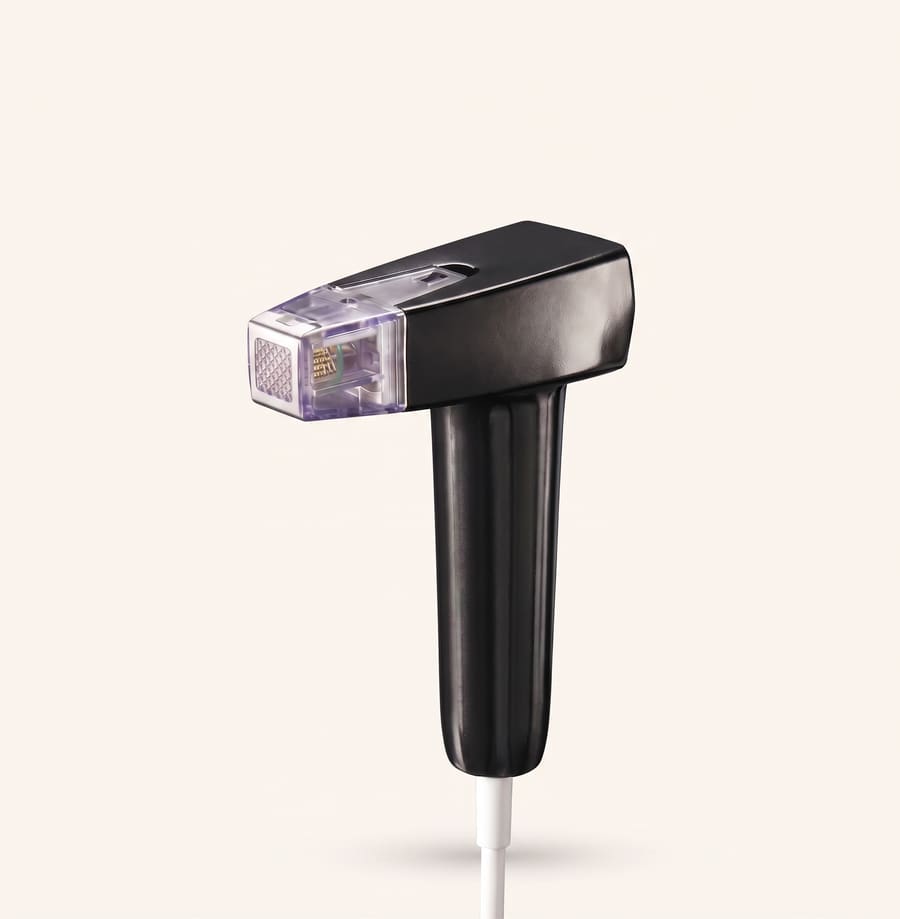
Lower pigmentation risk than lasers or peels; improvement builds over weeks to months, usually over a short course of sessions.
Treatments that may help
Matched to your scar type and skin tone, since the wrong technique on the wrong scar type, or the wrong skin type, can make things worse, not better.


Your questions, answered
References
- [1] DermNet NZ — Acne Scarring
- [2] American Academy of Dermatology — What Causes Acne Scars
- [3] Cleveland Clinic — Acne Scars
- [4] Mayo Clinic — Acne Scars: What's the Best Treatment?
- [5] PMC — Acne Scars: Pathogenesis, Classification and Treatment
This page changes as evidence evolves. It is for general education, not personalised medical advice — a consultation with your doctor confirms suitability, risks and options for you specifically.
Reviewed by Dr. Dinesh Kanasen (MMC 43953) · Last updated 16 October 2026
Not sure what type of scarring you have?
A doctor-led assessment maps your exact scar types and skin response before recommending any resurfacing or injectable approach.