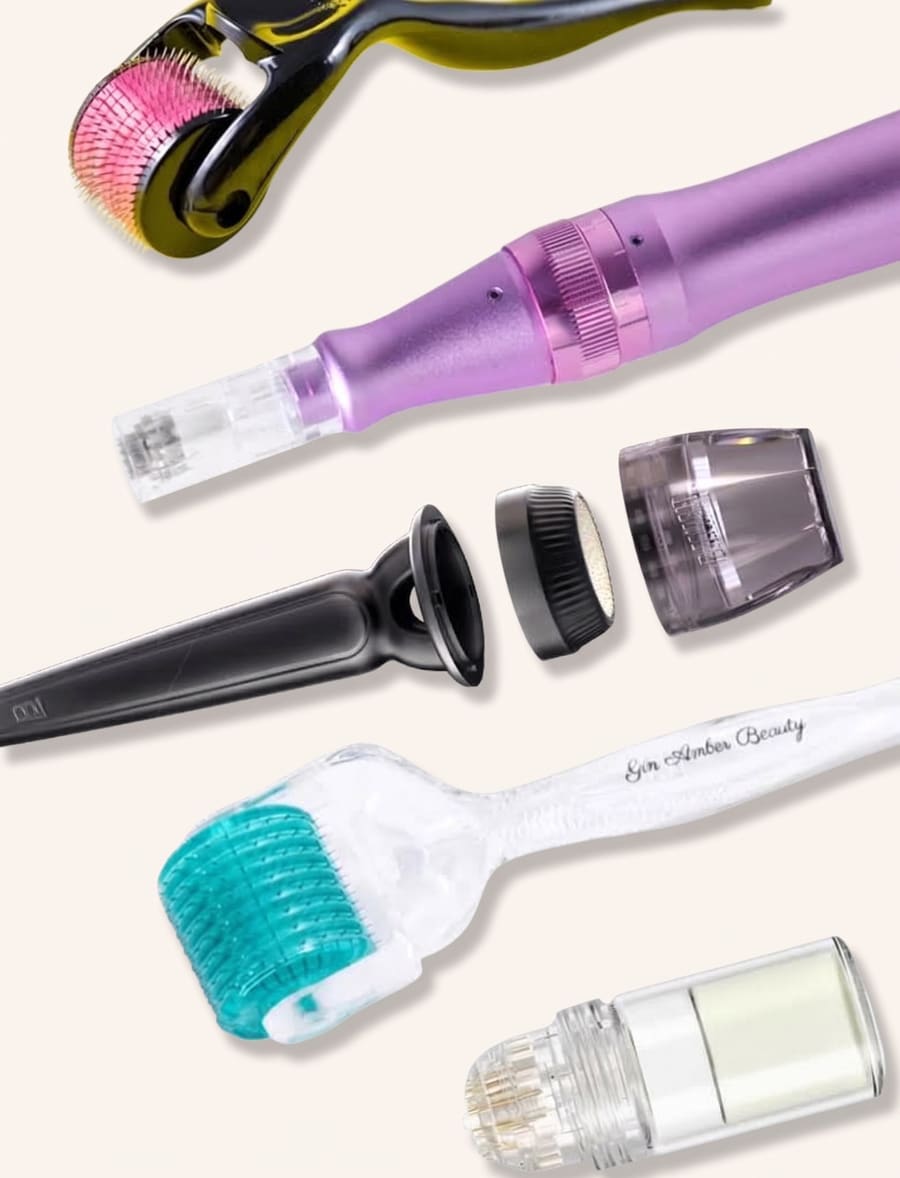
Uses a sterile device containing fine needles to create controlled microscopic channels within the skin. This controlled micro-injury stimulates the skin's repair response and supports collagen and elastin remodelling, commonly used to improve selected acne scars, enlarged pores, uneven texture, fine lines and overall skin quality.
Commonly Asked
Microneedling uses fine sterile needles to create controlled microscopic channels in the skin, stimulating the natural repair response.
It is commonly used for acne scars, enlarged pores, uneven texture, fine lines and overall skin-quality concerns.
Patients may experience prickling or pressure. Topical anaesthetic may be used for deeper treatment protocols.
Pinpoint bleeding can occur, particularly with deeper medical microneedling. The degree depends on treatment depth and area.
Redness, warmth, mild swelling and sensitivity may occur. The skin can temporarily resemble a mild sunburn.
Follow the clinic's post-procedure instructions. Applying makeup too soon may unnecessarily irritate the recovering skin.
A series of treatments is commonly recommended for concerns such as scarring, although the number varies.
Yes, it is commonly used for selected atrophic acne scars. Scar type and depth determine whether other treatments are also required.
Areas with significant active inflammation or infection may need to be treated first. Your clinician should assess the skin before proceeding.
No. Standard microneedling produces mechanical microchannels, while Morpheus8 and Sylfirm X additionally deliver radiofrequency energy.
Healite II LED light therapy is sometimes added after microneedling to help support the skin's recovery during the downtime period. Whether this is suitable for you depends on your treatment depth and your doctor's recommendation.