Pigmentation • Uneven tone • Selected pigment concerns
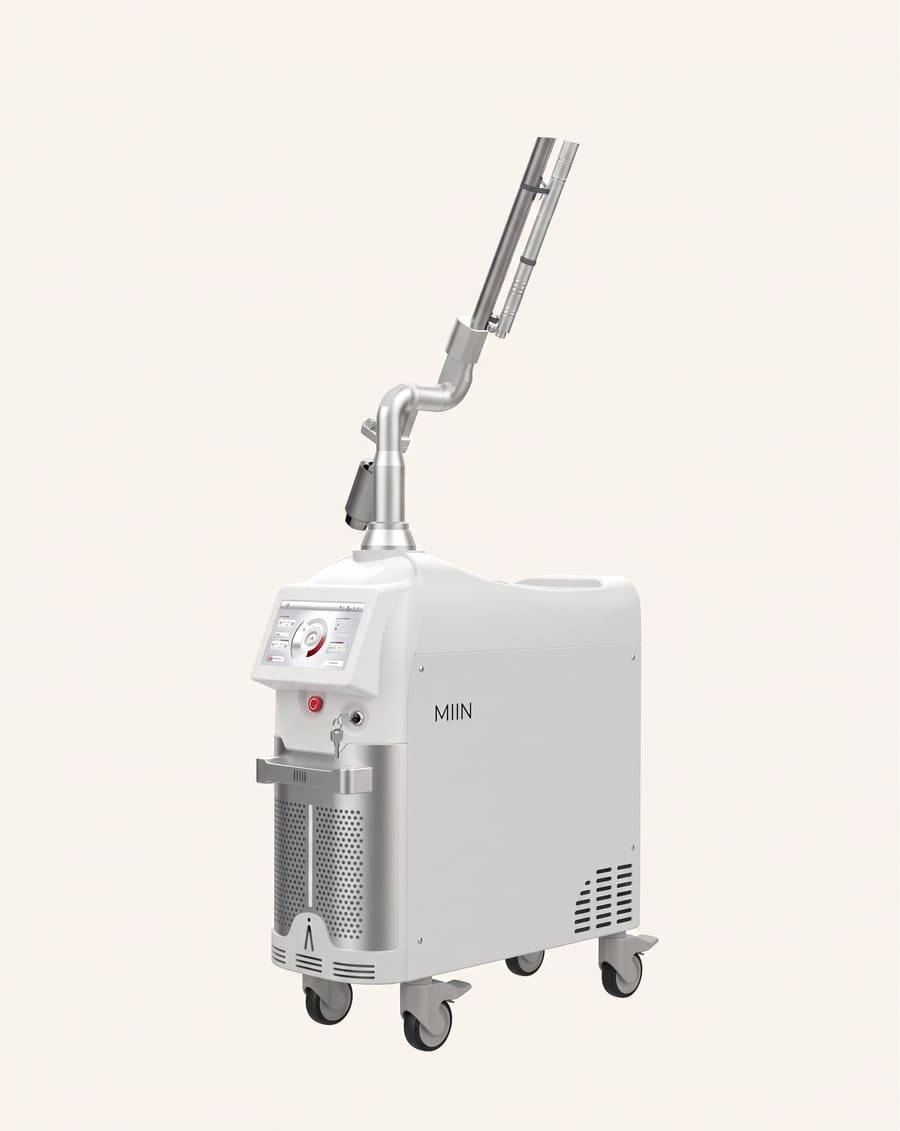
MIIN Nd:YAG Laser by LTRA GlobalDepends on area and treatment mode
A Q-switched Nd:YAG laser from LTRA Global using 1064 nm and 532 nm wavelengths with nanosecond pigment modes (MIIN should not be described as a picosecond laser). Your doctor selects the mode for selected benign pigment concerns, such as suitable sun spots, freckles and uneven-looking tone, with a personalised plan, realistic expectations and ongoing maintenance. Brown post-acne marks and melasma need careful assessment first, as inflammation and laser treatment can worsen pigmentation.
Purposeful Combinations
Daily photoprotection
Broad-spectrum SPF 30+ and shade; tinted iron-oxide sunscreen is useful in melasma care.
Doctor-prescribed pigment care
May address ongoing pigment production. Choice and timing depend on diagnosis, tolerance and healing.
Gentle barrier-supporting skincare
Supports comfort and recovery. Avoid irritating products while the skin is sensitive.
Acne management
Treat ongoing acne when it is driving new brown marks; laser is assessed separately.
Other Laser & Light treatments
Considered only for a separate assessed need. Device choice and spacing require a doctor-led plan.
Commonly Asked
No. MIIN is a Q-switched Nd:YAG system with nanosecond pigment modes. The clinic selects the appropriate mode and wavelength for your diagnosed concern.
You may feel brief snapping, warmth or stinging. Comfort varies with settings and area, so tell your clinician if it becomes painful.
Not always. The clinic will advise based on your treatment plan and comfort. Numbing does not replace protective laser eyewear, which is essential throughout treatment.
It may be considered as an adjunct for selected cases. Melasma can recur or worsen, so assessment, sun protection and appropriate medical care come first.
Some post-inflammatory marks may be considered after acne is controlled. Brown marks differ from red marks and indented scars, which need separate assessment.
It may be, after assessment. Skin tone and past pigment reactions matter, and a test area may be considered. Darkening or lightening of treated skin remains possible.
No. The goal is to improve selected unwanted pigment and uneven tone. Whitening your natural complexion or removing all pigment is not the aim.
Some concerns need a course, and response varies. Your doctor will reassess before repeating treatment, one-session clearance is not promised.
Pigment can return. Keep up daily protection, skincare and reviews, repeat laser is tailored to need rather than an indefinite fixed schedule.
There's no guarantee. Repeated laser toning can itself cause persistent pale patches, and new light spots or worsening pigment need review before further treatment.
Sometimes. Each treatment should have a clear purpose, your doctor plans the sequence and spacing around skin sensitivity and recovery.
Follow the clinic's aftercare, use gentle skincare and sun protection, and do not pick crusts. Resume irritating actives only as advised.
Mention recent tanning, medicines, pregnancy, infection or cold sores, previous laser reactions, cosmetic tattoos and recent procedures. Show any changing or bleeding spots before treatment, as these need diagnosis first.
Reviewed by Dr. Dinesh Kanasen (MMC 43953) · Last updated 22 October 2026