Platelet-rich plasma, prepared from your own blood45–60 minutes, including preparation
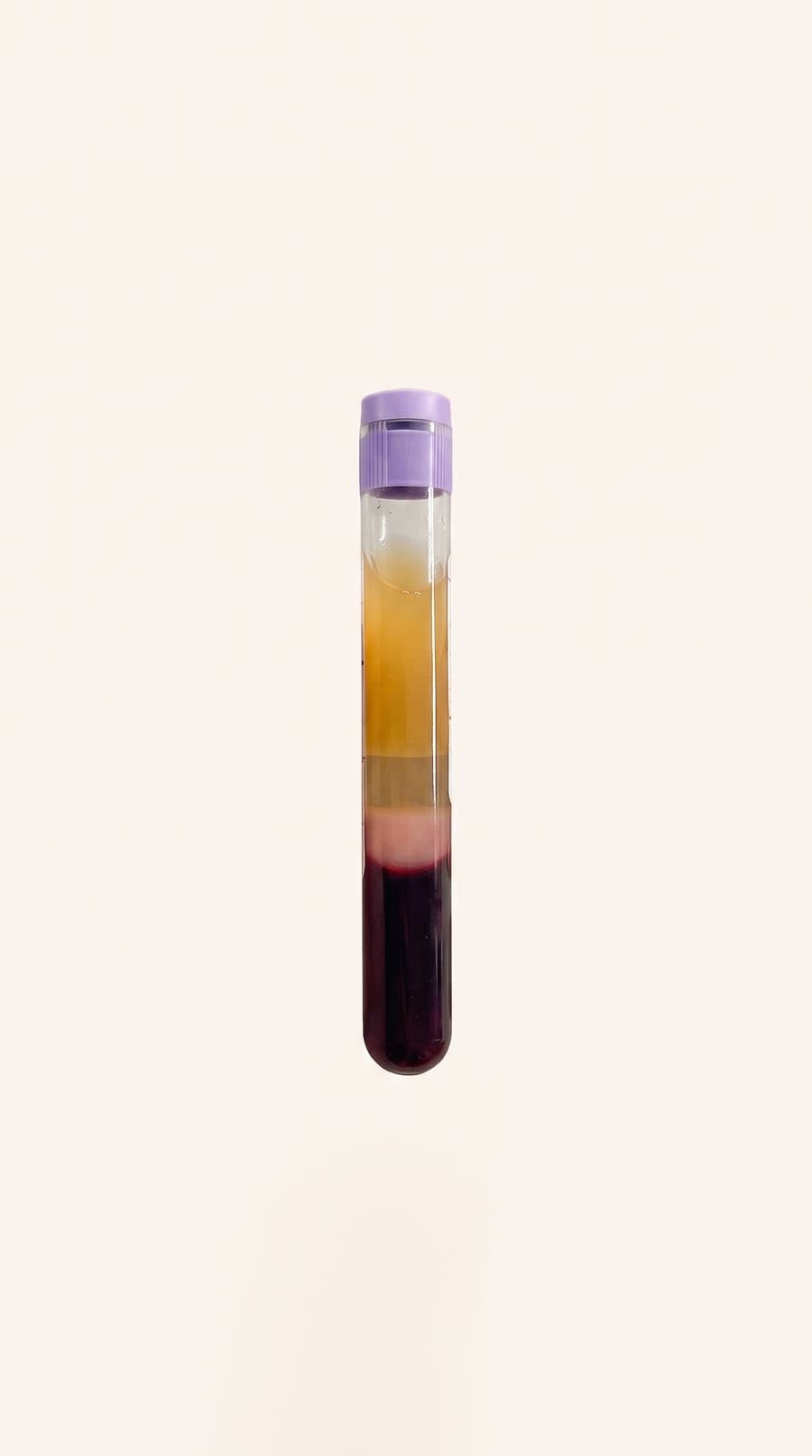
PRP is prepared by drawing a small sample of your own blood and spinning it in a centrifuge to concentrate the platelet-rich plasma, which is then re-introduced into the treatment area. Because it uses your own blood, the risk of allergic reaction or rejection is low, and the process follows standard sterile clinical protocols. It's commonly used for overall skin rejuvenation and texture, as well as supporting hair density in early-stage thinning, with a course of sessions typically recommended for a visible difference.
Commonly Asked
A small blood sample is drawn and spun in a centrifuge to separate and concentrate the platelet-rich plasma, which is then re-introduced into the treatment area. Because it uses your own blood, the risk of allergic reaction or rejection is low, and the process follows standard sterile clinical protocols.
PRP is commonly used for overall skin rejuvenation and texture, as well as for supporting hair density in early-stage thinning. The specific application and technique can differ depending on which concern is being addressed.
A course of several sessions spaced a few weeks apart is typically recommended, as PRP works gradually by stimulating the body's own repair processes rather than delivering an instant change. Your doctor will outline an expected timeline based on your goals.
A topical numbing cream is usually applied beforehand to minimise discomfort, and most patients describe the sensation as mild pressure or pricking. Some redness or swelling at the injection sites can occur but usually resolves within a day or two.
All three aim to support skin quality, but PRP uses your own blood-derived growth factors, Skin Boosters use injectable hyaluronic acid, and Exosome Therapy uses cell-signalling particles rather than whole cells or plasma. Your doctor can explain which mechanism is best matched to your specific skin concern.
It's sometimes combined with treatments such as Sylfirm X, CO2 laser or Medical Microneedling as part of a broader plan. Your doctor will advise on safe sequencing and spacing if more than one treatment is recommended.