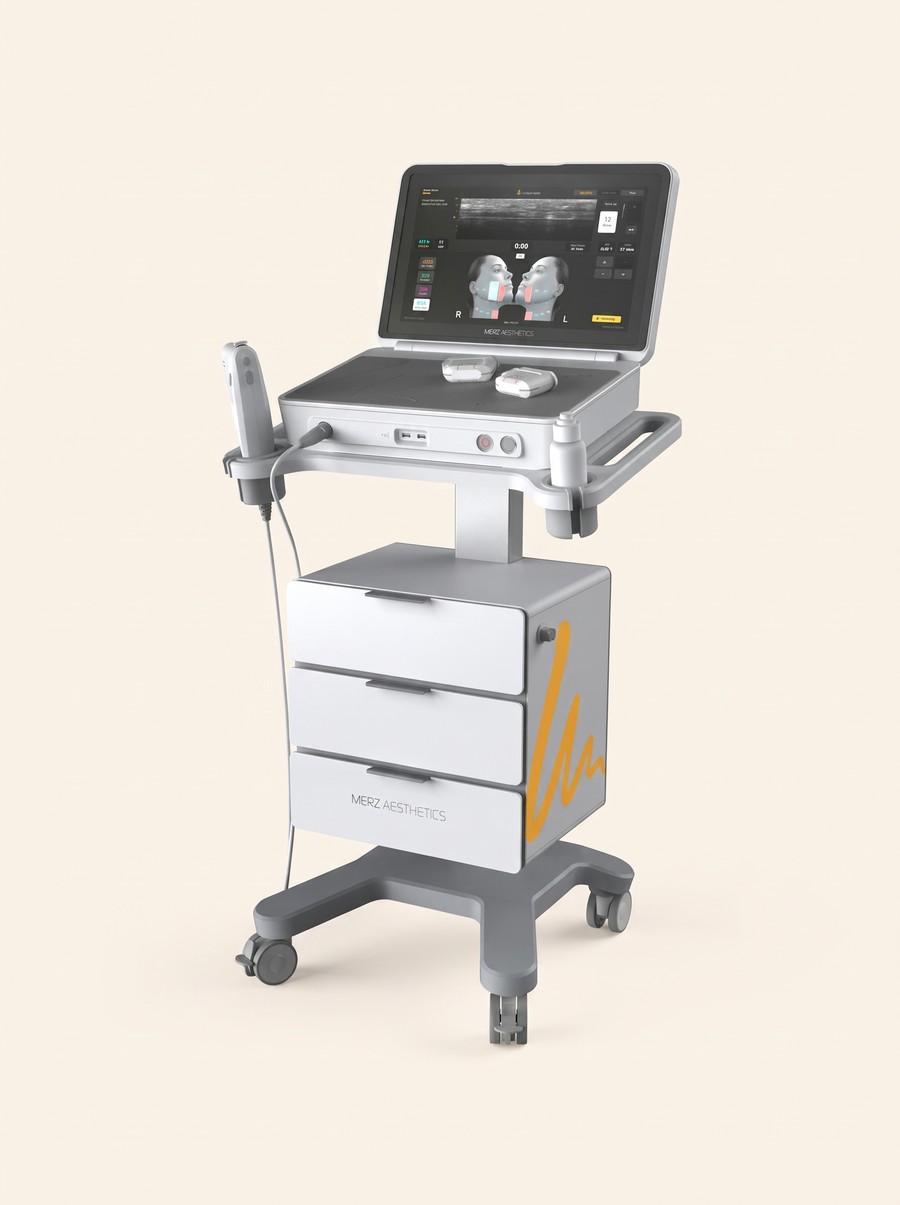
Ultherapy PRIME by Merz Aesthetics: Microfocused Ultrasound with Visualization (MFU-V)Approximately 30–90 minutes depending on the area treated
Ultherapy PRIME is a non-invasive treatment using microfocused ultrasound with real-time imaging, allowing your doctor to visualise tissue depth and probe coupling while delivering controlled thermal treatment points to selected layers. It is considered for lifting the eyebrow, lax tissue beneath the chin and neck, and improving the appearance of lines on the décolleté. The aim is a subtle, natural-looking lift and firmer-feeling skin as collagen remodels gradually over time, it does not replace a surgical facelift or restore lost facial volume, and suitability depends on individual anatomy. Because it doesn't rely on pigment absorption the way certain lasers do, it's broadly usable across skin tones, though your doctor still reviews your skin and medical history before treatment.
Purposeful Combinations
Tightan II HIFU / Sunny RF
An alternative energy-based tightening pathway; your doctor chooses or stages modalities by anatomy.
Sylfirm X RF Microneedling
For texture, pores or scarring, which Ultherapy PRIME does not primarily address; your doctor plans energy exposure and recovery between the two.
Skin Boosters / Profhilo
For hydration and skin quality, not a substitute for lifting.
Radiesse / Dermal Fillers
For separately assessed volume or contour goals; your doctor reviews any implant areas and treatment timing before combining.
ADVATx Yellow Laser / MIIN Nd:YAG Laser
For redness or pigmentation concerns, treated on a separate plan.
Commonly Asked
It's a non-invasive treatment that uses microfocused ultrasound with real-time visualisation to deliver controlled thermal energy to selected tissue depths, supporting gradual collagen remodelling without incisions.
Both use focused ultrasound, but PRIME adds real-time ultrasound visualisation so your doctor can see tissue depth and plan treatment more precisely before delivering energy.
Established uses include lifting the eyebrow, lax tissue beneath the chin and on the neck, and improving the appearance of lines and wrinkles on the décolleté.
It may improve the appearance of selected lower-face and submental laxity, including jawline softness. Results depend on the underlying cause and degree of contour change, which your doctor assesses first.
No. It's intended for mild-to-moderate skin laxity and cannot replace a surgical facelift or restore lost facial volume. Significant excess skin, marked volume loss or expectations of a surgical-level result may call for a different option.
Patients may feel heat, tingling or discomfort during treatment, particularly near bone. Comfort measures can help, but pain-free treatment isn't guaranteed.
Typically 30–90 minutes, depending on the number and size of areas treated, consultation and comfort measures. Your doctor confirms the time needed for your individual plan.
Many suitable patients begin with a single treatment. Follow-up and any future maintenance depend on your clinical response, ongoing ageing changes and your goals, as assessed by your doctor.
Not usually. Results are generally gradual, temporary tightness felt right after treatment isn't the same as the eventual collagen-remodelling outcome, which develops over the following weeks to months.
Changes develop gradually over weeks, with more noticeable effects often assessed at around two to three months. Some remodelling may continue for several months afterwards.
Visible improvement can last a year or more in some patients, but durability varies, and ageing continues regardless. Maintenance is individualised rather than scheduled automatically.
Most patients resume routine activities promptly. Temporary redness, swelling, tenderness or tingling may occur, minimal downtime doesn't mean zero side effects.
Pain, swelling, bruising, altered sensation and temporary nerve symptoms can occur. Uncommon but important reported effects include burns, fat loss in the treated area, nerve effects and scarring.
Tell your doctor about implanted devices or metal, fillers in the treatment area, severe acne, open wounds, pregnancy or breastfeeding, and anticoagulant medication.
Follow your personalised aftercare instructions, use gentle skincare, and report any persistent pain, weakness, burns or other unexpected symptoms to the clinic.
No. Fillers restore or reshape volume while Ultherapy PRIME targets selected lax tissue, they solve different problems. If your main concern is substantial laxity or excess skin needing greater repositioning, a surgical evaluation may be more appropriate.
Sometimes. Your doctor reviews any prior fillers, threads or energy treatments before planning timing and treatment sites, combining isn't guaranteed to give superior results, and sequencing is decided case by case.
Reviewed by Dr. Dinesh Kanasen (MMC 43953) · Last updated 4 November 2026