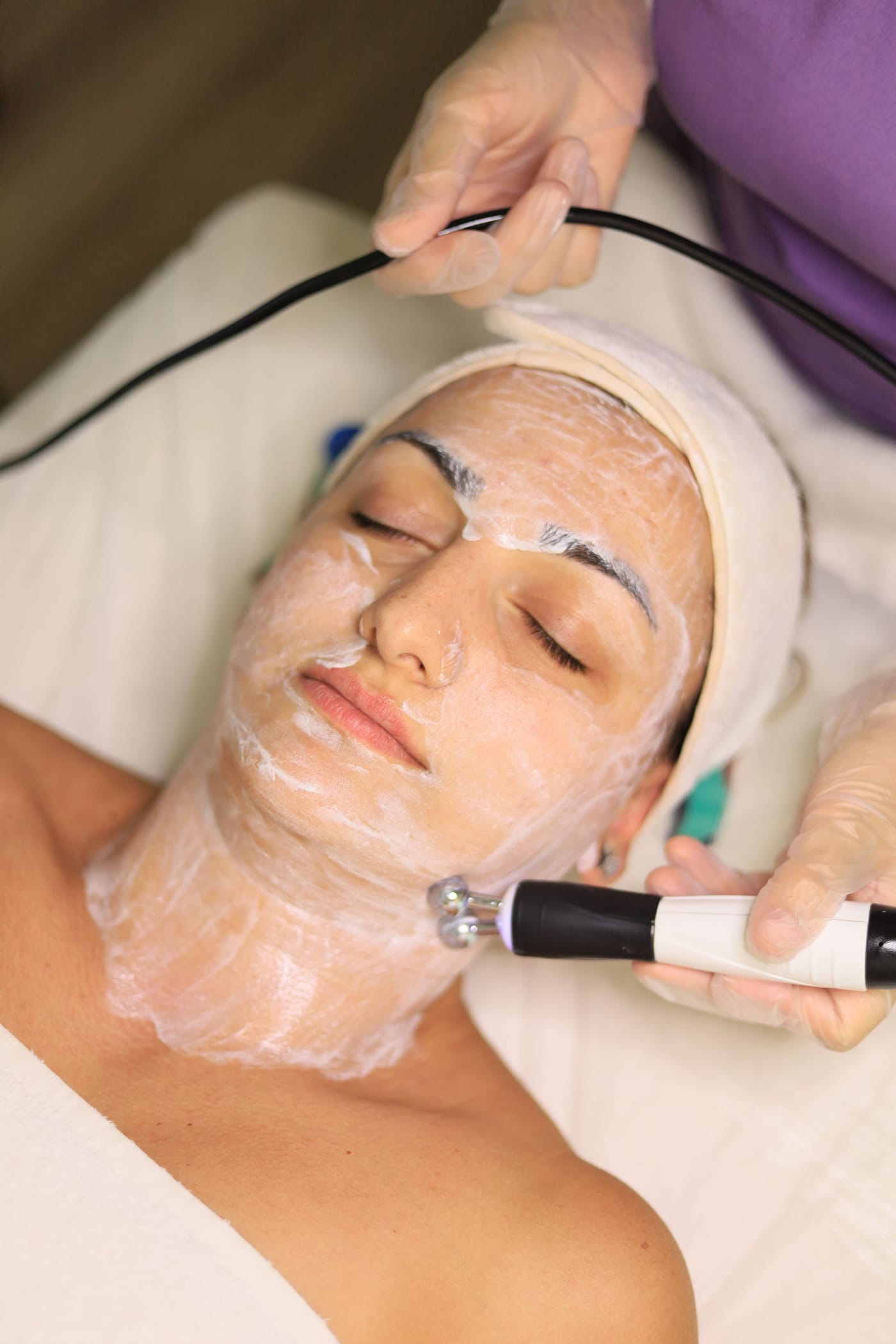
Key Takeaways
When I assess skin laxity, I do not start by asking which device to use. I first ask what is actually creating the visible change. Is it mainly loss of firmness, volume change, surface texture, or redundant skin? Technology is selected according to your skin, not the other way around. Once the problem and treatment objective are clear, the energy source, depth, intensity and recovery profile can be discussed more intelligently.
Dr. D's perspective

1. What Is Skin Laxity, and Why Does It Happen?
Skin laxity means that the skin and its supporting tissues have lost some of their ability to maintain a firm contour. It may show as fine creasing, softer jawline definition, mild jowling or looser neck skin. Ageing also changes collagen and elastin, fat compartments, ligaments and deeper supporting structures, so visible laxity is not always caused by the skin alone.[4][5]
That distinction matters because an energy treatment can improve skin quality and stimulate remodelling, but it cannot physically remove a large amount of excess skin or reposition every deeper structure. Weight change, sun exposure, smoking, genetics and normal ageing can also influence the appearance of laxity.[4][5]
The degree of laxity is therefore one of the first clinical questions. Non-invasive tightening tends to be more suitable when there is limited sagging. When redundant skin is substantial, the expected ceiling of improvement is different.[4][5]
2. How Do the Main Technologies Work?
HIFU, or high-intensity focused ultrasound, concentrates ultrasound energy at selected depths beneath the skin. The thermal effect is intended to stimulate tissue remodelling. Systematic reviews report improvement in facial laxity, particularly in mildly to moderately lax skin, although protocols and devices vary and patient-reported improvement can be more modest than investigator ratings.[1][2][3]
Radiofrequency uses electrical energy to generate controlled heat in tissue. Depending on the platform, RF can be delivered from the skin surface or through microneedles. RF microneedling combines needle penetration with RF delivery at selected depths, so it is more involved than a fully non-invasive RF treatment.[7][8][9]
The practical difference is depth and delivery, not simply brand name. The same broad category can contain devices with different hardware, energy modes and treatment protocols, so evidence for one platform should not automatically be transferred to another.[7][9][10]
Five Technologies, Different Ways of Delivering Energy
HIFU
Focused ultrasound, non-invasive. How it works: heat is concentrated at selected depths to stimulate tissue remodelling. Typical role: mild-moderate laxity, lift/contour focus.
RF Microneedling
Fractional RF microneedling, minimally invasive. How it works: microneedles place RF energy within the skin; depth and energy can be adjusted. Typical role: mild-moderate laxity plus texture/scarring.
Sylfirm X
RF microneedling, minimally invasive. How it works: non-insulated microneedles deliver RF; pulsed and continuous modes allow different treatment strategies. Typical role: firmness/texture plus selected pigment/vascular concerns.
EXILIS
Non-invasive RF-based energy platform. How it works: non-invasive heating is used to stimulate collagen remodelling; exact configuration varies by generation. Typical role: mild laxity, gradual tightening.
SUNNY RF
RF platform, non-invasive. How it works: monopolar RF and, in some configurations, additional RF handpieces deliver controlled tissue heating. Typical role: mild-moderate laxity, contour/firmness.
The device name matters less than the energy type, depth, treatment goal and patient selection.
Figure 2. Different platforms deliver energy in different ways. Category-level evidence does not automatically establish brand-specific effectiveness.
3. Which Approach May Fit Mild, Moderate or More Advanced Laxity?
There is no single treatment that fits every pattern of laxity. The decision depends on the amount and location of laxity, skin quality, volume distribution, treatment goals, tolerance for discomfort and recovery, and whether texture or another skin concern also needs attention.
| Laxity Pattern | Possible Role | Examples to Discuss | Important Limitation |
|---|---|---|---|
| Mild: early loss of firmness, little redundant skin | Gradual collagen remodelling may be reasonable. | HIFU, EXILIS, SUNNY RF | Improvement is generally gradual and does not reproduce a surgical lift. |
| Moderate: visible jawline or neck laxity | More targeted or deeper remodelling may be considered. | HIFU, selected RF microneedling, Sylfirm X | Outcome depends strongly on anatomy, settings and skin excess. |
| More advanced: substantial loose skin or marked jowling | Energy treatment may improve skin quality but may not address the main structural problem. | Surgical assessment, with non-surgical treatment considered only where appropriate | Devices cannot cut away or reposition redundant skin. |
This is a decision aid, not a prescription. A stronger setting is not automatically a better treatment. The objective is to use enough energy at an appropriate depth to address the clinical problem while respecting anatomy, skin response and recovery.[2][4][7]
4. What Are HIFU, RF Microneedling, Sylfirm X, EXILIS and SUNNY RF Like?
What Can HIFU Offer?
HIFU is a non-invasive ultrasound approach. In a 2023 meta-analysis of 13 studies involving 477 participants, the pooled Global Aesthetic Improvement Scale response was 77% at 90 days and 69% at 180 days. A separate systematic review of 16 studies found investigator-rated improvement in 92% at day 90, while patient-reported improvement was milder. These figures describe study populations, not a guaranteed result for an individual patient.[1][2]
Treatment can involve heat or pulsing sensations, and temporary redness, swelling or tenderness can occur. Results develop over time. Excessive laxity was associated with poorer outcomes in the systematic review.[1][4]
What Is RF Microneedling, and When Can It Be Useful?
RF microneedling uses small needles to deliver radiofrequency energy within the skin. This can provide controlled dermal heating at a selected depth, but it also means the procedure is more involved than surface-delivered RF. Topical anaesthetic is commonly used, and temporary redness, swelling and pinpoint marks can occur.[7][9]
The broader RF microneedling category has evidence for skin remodelling, but device-specific evidence remains important. A study of one platform or protocol does not establish that every RF microneedling device produces the same outcome.[7][9]
What Is Sylfirm X?
Sylfirm X is a branded RF platform using microneedles and pulsed-wave and continuous-wave RF modes. Published studies have examined RF microneedling and Sylfirm X in skin-remodelling and pigmentation-related settings, but brand-specific comparative evidence remains limited. For that reason, it is more accurate to describe Sylfirm X as one RF platform whose suitability depends on the clinical goal and protocol, rather than assume that its brand name predicts the result.[9][10][11]
In Malaysia, the MDA record available in August 2026 lists Sylfirm X as a high-frequency surgical unit with an intended purpose relating to electrocoagulation and haemostasis, with registration shown through 8 November 2026. That regulatory entry should not be read as proof of cosmetic superiority or as evidence that every aesthetic claim is an approved indication.[19]
What Is EXILIS?
EXILIS is a non-invasive energy platform associated with RF heating, with some configurations combining RF and ultrasound. Published clinical literature has evaluated Exilis-branded systems for facial rejuvenation and tightening. A prospective study of 30 subjects using a monopolar RF protocol reported improvements in facial ageing measures, but the device generation and protocol matter when interpreting those results.[6][12]
What Is SUNNY RF?
SUNNY is an RF platform from SHENB with Sunny and Pulsar handpieces. Its U.S. FDA 510(k) documentation describes the Sunny handpiece for dermatologic electrocoagulation and haemostasis and the Pulsar handpiece for topical heating for specified medical conditions. Those regulatory indications should not be expanded into a general claim that the device is proven for cosmetic skin tightening.[13][14]
A 2026 retrospective study of 22 adults using a Sunny plus Pulsar protocol reported mild improvement in cheek skin smoothness and high satisfaction, without serious or delayed adverse events. Because the study was small and retrospective, it is better treated as early device-specific evidence rather than definitive proof of effectiveness.[15]
5. What Does Treatment Feel Like, and How Much Recovery Is Typical?
There is no universal pain score because energy settings, treatment area and individual sensitivity differ. In the 2023 MFU meta-analysis, pooled pain was about 3.1 out of 10. RF microneedling is generally more involved because heat is delivered through needles, while non-invasive RF is usually experienced as controlled warmth.[2][9]
Recovery also follows the delivery method. Non-invasive ultrasound and RF usually have little visible downtime, although temporary redness, swelling or tenderness can occur. RF microneedling can cause more noticeable redness, swelling and pinpoint marks. Actual recovery depends on needle depth, energy, treatment area and individual healing, so a generic downtime promise is not appropriate.[1][4][9]
| Technology | During Treatment | After Treatment | Downtime Pattern |
|---|---|---|---|
| HIFU | Heat/pulsing sensations; discomfort can be moderate. | Temporary redness, swelling or tenderness may occur. | Usually little downtime; results build gradually. |
| RF microneedling | Topical anaesthetic is commonly used; heat/pinprick sensations are expected. | Redness, swelling and pinpoint marks are common; skin may feel tender. | Often a few days of visible recovery; exact duration varies. |
| Sylfirm X | Topical anaesthetic is typically used; RF heat + microneedle sensations. | Redness and mild swelling are common; settings affect recovery. | Usually short downtime, but it is more involved than non-invasive RF. |
| EXILIS | Warmth and pressure; generally designed as a non-invasive procedure. | Transient redness or warmth can occur. | Little or no meaningful downtime is typical for non-invasive RF/ultrasound platforms. |
| SUNNY RF | Controlled warmth; tolerability depends on handpiece, energy and treatment pattern. | Transient redness or warmth may occur. | Published device-specific data are still limited; recovery should be based on the exact protocol. |
Visible change is also gradual. The AAD notes that ultrasound and RF tightening effects typically develop over months as collagen remodelling occurs. Some patients may notice an earlier feeling of firmness, but that should not be confused with the final treatment effect.[4]
6. What Are the Limitations and Risks?
The main limitation is structural. Energy-based treatments can improve firmness, texture and contour, but they cannot remove a large amount of redundant skin. Increasing energy does not solve an anatomical problem when excess skin or deeper descent is the dominant issue.[4][5][7]
Possible short-term effects include redness, swelling, tenderness and discomfort. RF microneedling adds risks related to needle penetration and thermal injury, including prolonged inflammation, pigment change, infection and scarring if the treatment is poorly selected or performed. Energy-based procedures therefore require appropriate patient selection, device settings and medical technique.[7][9][16]
Skin type and a history of pigmentation also matter. RF is not absorbed by melanin in the same way as pigment-targeting lasers, but inflammation or thermal injury can still trigger post-inflammatory pigment change. A consultation should consider medications, active skin conditions, previous procedures, tendency to pigment, volume distribution and the exact device configuration.[9][16]
7. When Should Surgery Be Considered?
Surgery becomes more relevant when substantial excess skin, marked jowling, significant neck laxity or deeper structural descent is the main problem. A facelift or neck lift can remove and reposition tissue, which energy devices cannot physically do. The AAD describes surgical lifts as producing more dramatic results than non-surgical procedures, while non-surgical treatments generally provide gradual tightening.[4][5]
That does not mean every patient should choose surgery. Non-surgical treatment can be reasonable for milder laxity or for people who prefer a lower-invasiveness approach and understand the more modest correction. Patients who may consider surgery later should give the surgeon a full history of previous energy-based treatments.[5][17]
8. What Should I Ask Before Treatment?
- What is actually causing my visible laxity: skin firmness, volume change, deeper descent, or excess skin?
- What treatment objective are we targeting, and at what depth?
- What evidence exists for this exact device and protocol, rather than only for the broader technology category?
- What recovery should I realistically expect, and what side effects should I watch for?
- What is the device's current registration or intended use in Malaysia?
- If the response is limited, what alternatives would still be reasonable?
9. Frequently Asked Questions
10. Conclusion and Practical Next Step
The most useful way to understand non-surgical skin tightening is as a group of technologies with different energy-delivery methods, depths and recovery profiles. HIFU uses focused ultrasound. Non-invasive RF uses controlled surface-delivered heating. RF microneedling delivers RF through needles. Specific platforms such as Sylfirm X, EXILIS and SUNNY should then be considered according to their exact configuration, evidence and intended use.[1][4][7][9][13][14]
The central principle is simple: assess the problem first, define the treatment objective, then select the technology. For mild to moderate laxity with limited excess skin, gradual non-surgical improvement may be reasonable. When redundant skin or deeper structural descent dominates, a surgical assessment may provide a more appropriate discussion of what can realistically be changed.[4][5]
Educational next step
Before choosing a treatment, ask a qualified clinician to assess the degree and location of laxity, skin quality, volume distribution, relevant medical history and the exact device configuration. The useful goal is not to find the strongest machine, but to understand what is being treated, what the evidence supports, what the risks are and what degree of improvement is realistic.
Sources & References
The following sources were used to verify the clinical, scientific and regulatory information in this article. Accessed/reviewed 26 September 2026.
- [1] Contini, M., Hollander, M. H. J., Vissink, A., Schepers, R. H., Jansma, J., & Schortinghuis, J. (2023). A systematic review of the efficacy of microfocused ultrasound for facial skin tightening. International Journal of Environmental Research and Public Health, 20(2), 1522.
- [2] Ling, J., & Zhao, H. (2023). A systematic review and meta-analysis of the clinical efficacy and patients' satisfaction of micro-focused ultrasound treatment for facial rejuvenation and tightening. Aesthetic Plastic Surgery, 47, 1806–1823.
- [3] Haykal, D., Sattler, S., Verner, I., Madhumita, M., & Cartier, H. (2025). A systematic review of high-intensity focused ultrasound in skin tightening and body contouring. Aesthetic Surgery Journal, 45(7), 690–698.
- [4] American Academy of Dermatology Association. (2026). Many ways to firm sagging skin.
- [5] American Society of Plastic Surgeons. (2026). Facelift surgery.
- [6] Garg, S., Vashisht, K. R., Sushruth, P. R., & Saka, D. V. (2022). Monopolar radiofrequency for reposing drooping fat planes and facial rejuvenation: A prospective study on 30 subjects towards true antiaging. Journal of Cosmetic Dermatology, 21(4), 1489–1500.
- [7] Rohrich, R. J., Schultz, K. P., Chamata, E. S., Bellamy, J. L., & Alleyne, B. (2022). Minimally invasive approach to skin tightening of the face and body: Systematic review of monopolar and bipolar radiofrequency devices. Plastic and Reconstructive Surgery, 150(4), 771–780.
- [8] Vassão, P. G., et al. (2022). Radiofrequency and skin rejuvenation: A systematic review.
- [9] Synder, B., Chen, J., & Elbuluk, N. (2023). Radiofrequency and radiofrequency microneedling in skin of color. Dermatologic Surgery.
- [10] ClinicalTrials.gov. (2023–2026). NCT06415435: A multi-center, open-label, prospective study of the Sylfirm X device for the treatment of melasma.
- [11] Hwang, J. M., Lee, S. H., Baek, E. J., et al. (2025). Comparison of the effects of fractional microneedle radiofrequency and microneedling on modulating the senescent fibroblast milieu in aged skin. Scientific Reports, 15, 18296.
- [12] Chilukuri, S., & Lupton, J. (2017). 'Deep heating' noninvasive skin tightening devices: Review of effectiveness and patient satisfaction. Journal of Drugs in Dermatology, 16(12), 1262–1266.
- [13] Malaysian Medical Device Authority. (2026). Sunny high frequency electrosurgical unit registration record.
- [14] U.S. Food and Drug Administration. (2025). 510(k) summary: Sunny (K242241).
- [15] Hyun, D. Y., Nam, S. M., Cha, H. G., & Park, E. S. (2026). Clinical effectiveness and safety of the Sunny radiofrequency device using two handpieces, Sunny and Pulsar, simultaneously in Republic of Korea: Retrospective clinical study. Medical Lasers, 15(2), 123–128.
- [16] American Society of Plastic Surgeons. (2026). Facelift surgery: Safety.
- [17] Humphrey, V. S., Rambhia, P. H., Gmyrek, R., & Chapas, A. (2025). Microfocused ultrasound with visualization: A systematic review of adverse events and risk of subsequent facelift compromise. Dermatologic Surgery, 51(4), 424–429.
- [18] NHS. (2023). Facelift (rhytidectomy).
- [19] Malaysian Medical Device Authority. (2026). Sylfirm X high frequency surgical unit registration record.
This article changes as evidence, product approvals and regulations evolve. It is for general education, not personalised medical advice, so always confirm your own suitability, risks and options with a qualified doctor.